| LovelandPolitics.com |

| City Council Votes Unanimously To Uphold Planning Commission and Deny Appeal To Develop Staples Farm |
Loveland - March 18, 2008
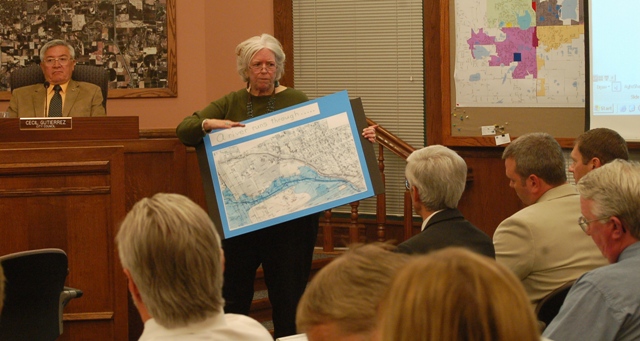
Crowd of Mostly Opponents overflowed the council chambers and several satellite rooms in City Hall
The Loveland City Council voted unanimously Tuesday night to deny an annexation/develpment proposal request for
Staples Farm along the Big Thompson River and bike trail citing mostly that "the high density of the project is
inconsistent with the surrounding area." see March 17 story "McMansions on Big Thompson River."
In two votes after hearing hours of testimony from the applicant and the public, the Loveland City Council asked few
questions before voting unanimously to uphold the Loveland Planning Commission denial of the project and voted
unanimously again to deny the annexation request.
The public testimony ranged from complaints by adjacent property owners that the development would destroy their
views and peaceful rural settings to one woman who said she moved to Loveland from West Virginia but felt the city
website's description of the bike trail is deceptive. One elderly gentleman spoke about the 1976 Big Thompson flood
and his experience as a paid Loveland firefighter at the time in trying to rescue people in the vicinity of Staples Farm.
One owner of the property (an investment group of approximately 30 people now own the land) complained she would
be unable to sell the property and said many investors had used their retirement savings to pay for the long and
expensive City of Loveland application process. John P. Lewis, a member of Loveland's Open Lands Commission
and a local real estate agent, suggested the city offer other property owned by the city on Taft in exchange for the
Staples Farm thus allowing the developer to build 50 versus the 23 homes proposed.
While the testimony covered every aspect of the historic Staples Farm, wildlife, geese hunting, views, flood plains and
even questions by Councilman Skowron regarding the potential for problems with lights from Loveland's public
baseball field on the other side of the river, the denial came down to density. Nearly every member of the council,
while holding different views regarding the varying aspects of the project, said the density was too great for the area.
Mayor Pielin and both developers on the council (Clark and Heckel) indicated they thought it would pass if the density
was changed.
After public comment was closed, Councilman David Clark tried to find weasel wording from staff to compensate the
property owners for the water shares they said they gave-up for the development. In addition, he suggested the council
maybe approve the annex but not the project as it was clear the applicant was unlikely to receive a majority of the
votes. City Attorney John Duval explained to Clark that he normally recommends also denying the annexation if the
council doesn't approve of the project. Duval explained the annexation is where the council enjoys the most discretion
in deciding the project density.
Carol Johnson, looking to Clark, asked for clarification regarding lot sizes by indicating she believed the complaint by
opponents of the project that some of the proposed lots were as small as 1/4 acre was incorrect. Staff confirmed that
some lots were, in-fact, this small to which Johnson gave Clark a long hard look.
Mayor Pielin
The Mayor asked a number of questions before stating he felt the density made the project difficult to support. He also
spoke briefly about his wife having worked at Loveland's old hospital on the hill overlooking the property and enjoying
the view whenever he visited her office.
Pielin also complimented staff for having recommended supporting the proposal by saying, "I think staff has a
particularly hard job trying to make something work that is despised."
Councilman Walt Skowron
Councilman Skowron stated, "This is a very excruciating decision to the say the least." Skowron, who voted against a
previous development and annexation plan for the property, also stated, "I think the density of this development is too
high."
Councilman Darryl Klassen
Councilman Klassen disclosed he once owned 22 acres only 300 yards from the Staples Farm but said he agreed with
the comments of his colleagues regarding the density.
Councilman Kent Solt
Councilman Solt, who is also an attorney, quoted the findings of the Planning Commission in their disapproval of the
project by reading the city municipal code section regarding compatibility of adjoining property uses. He said he
agreed with the findings of the Commission and would be voting against the proposal.
Councilman Larry Heckel
Councilman Heckel stated, "Those of you interested in seeing this remain open space need to organize yourselves...." to
buy the property or find another alternative.
Crowd of Mostly Opponents overflowed the council chambers and several satellite rooms in City Hall
The Loveland City Council voted unanimously Tuesday night to deny an annexation/develpment proposal request for
Staples Farm along the Big Thompson River and bike trail citing mostly that "the high density of the project is
inconsistent with the surrounding area." see March 17 story "McMansions on Big Thompson River."
In two votes after hearing hours of testimony from the applicant and the public, the Loveland City Council asked few
questions before voting unanimously to uphold the Loveland Planning Commission denial of the project and voted
unanimously again to deny the annexation request.
The public testimony ranged from complaints by adjacent property owners that the development would destroy their
views and peaceful rural settings to one woman who said she moved to Loveland from West Virginia but felt the city
website's description of the bike trail is deceptive. One elderly gentleman spoke about the 1976 Big Thompson flood
and his experience as a paid Loveland firefighter at the time in trying to rescue people in the vicinity of Staples Farm.
One owner of the property (an investment group of approximately 30 people now own the land) complained she would
be unable to sell the property and said many investors had used their retirement savings to pay for the long and
expensive City of Loveland application process. John P. Lewis, a member of Loveland's Open Lands Commission
and a local real estate agent, suggested the city offer other property owned by the city on Taft in exchange for the
Staples Farm thus allowing the developer to build 50 versus the 23 homes proposed.
While the testimony covered every aspect of the historic Staples Farm, wildlife, geese hunting, views, flood plains and
even questions by Councilman Skowron regarding the potential for problems with lights from Loveland's public
baseball field on the other side of the river, the denial came down to density. Nearly every member of the council,
while holding different views regarding the varying aspects of the project, said the density was too great for the area.
Mayor Pielin and both developers on the council (Clark and Heckel) indicated they thought it would pass if the density
was changed.
After public comment was closed, Councilman David Clark tried to find weasel wording from staff to compensate the
property owners for the water shares they said they gave-up for the development. In addition, he suggested the council
maybe approve the annex but not the project as it was clear the applicant was unlikely to receive a majority of the
votes. City Attorney John Duval explained to Clark that he normally recommends also denying the annexation if the
council doesn't approve of the project. Duval explained the annexation is where the council enjoys the most discretion
in deciding the project density.
Carol Johnson, looking to Clark, asked for clarification regarding lot sizes by indicating she believed the complaint by
opponents of the project that some of the proposed lots were as small as 1/4 acre was incorrect. Staff confirmed that
some lots were, in-fact, this small to which Johnson gave Clark a long hard look.
Mayor Pielin
The Mayor asked a number of questions before stating he felt the density made the project difficult to support. He also
spoke briefly about his wife having worked at Loveland's old hospital on the hill overlooking the property and enjoying
the view whenever he visited her office.
Pielin also complimented staff for having recommended supporting the proposal by saying, "I think staff has a
particularly hard job trying to make something work that is despised."
Councilman Walt Skowron
Councilman Skowron stated, "This is a very excruciating decision to the say the least." Skowron, who voted against a
previous development and annexation plan for the property, also stated, "I think the density of this development is too
high."
Councilman Darryl Klassen
Councilman Klassen disclosed he once owned 22 acres only 300 yards from the Staples Farm but said he agreed with
the comments of his colleagues regarding the density.
Councilman Kent Solt
Councilman Solt, who is also an attorney, quoted the findings of the Planning Commission in their disapproval of the
project by reading the city municipal code section regarding compatibility of adjoining property uses. He said he
agreed with the findings of the Commission and would be voting against the proposal.
Councilman Larry Heckel
Councilman Heckel stated, "Those of you interested in seeing this remain open space need to organize yourselves...." to
buy the property or find another alternative.

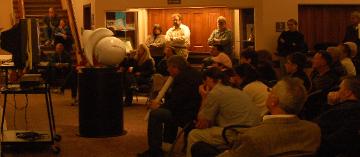
| Residents at the council meeting were forced to watch the proceedings from a television in the hallway as the chambers were overcrowded. |
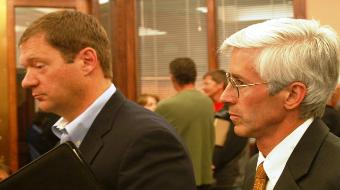
| Appearing disappointed and angry the applicant and attorney (from 'Western State') were overwhelmed by the large number of residents against the project. |
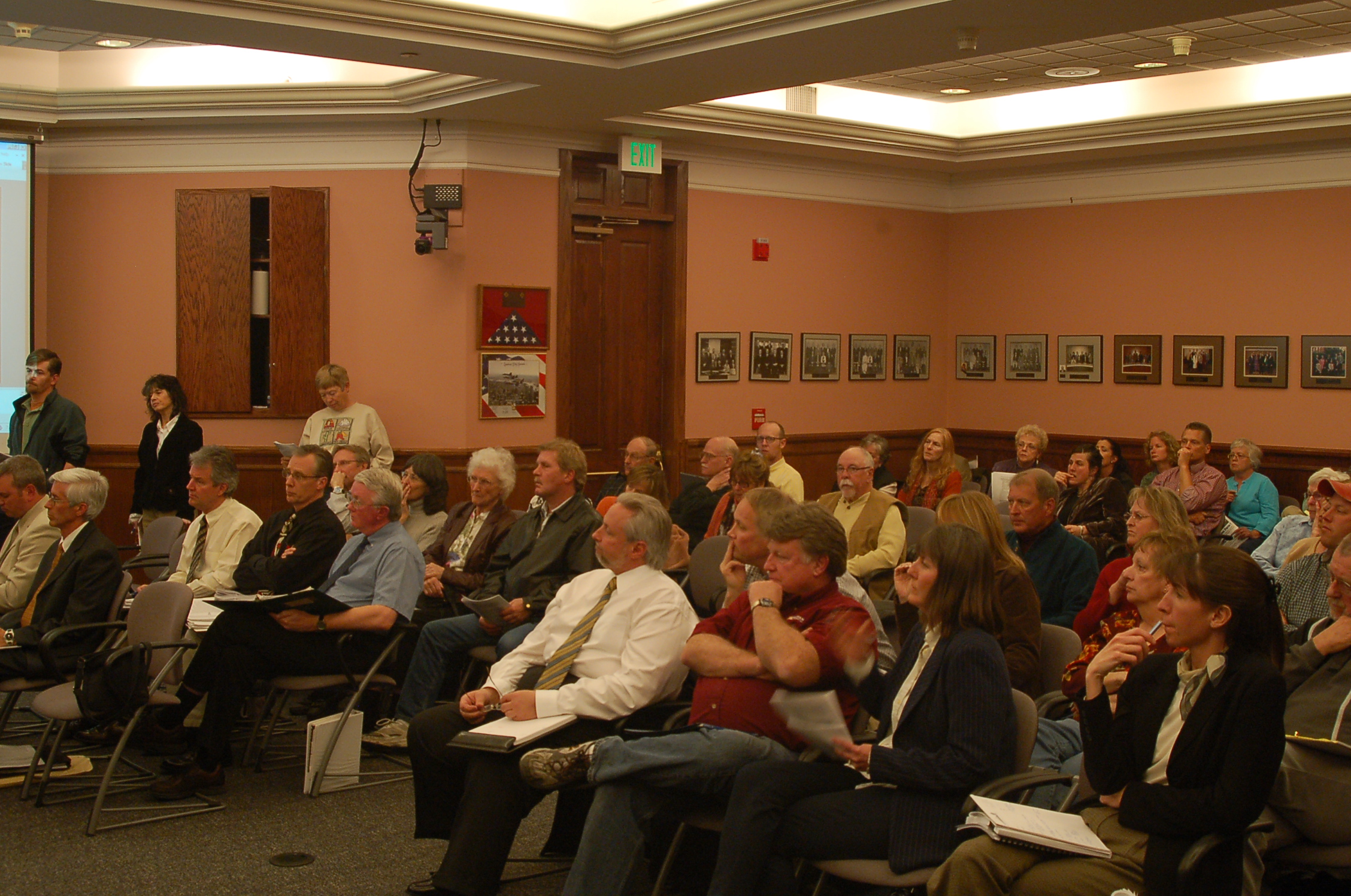
| Standing room only inside the council chambers |
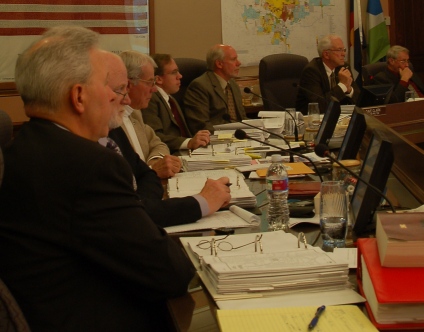
| The Loveland City Council patiently listened to testimony from dozens of citizens. From left to right: Loveland's City Attorney John Duval, City Manager Don Williams, Councilman Klassen, Councilman Solt, Mayor Pro Tem David Clark, Mayor Gene Pielin and Councilman Heckel. |
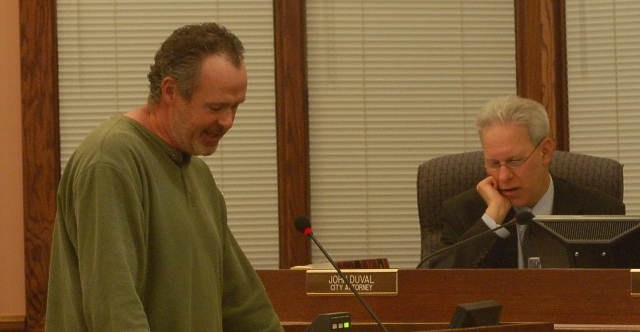
| Above: Larry Ruiter, who owns a house on 3 acres next to the proposed development joked with the council that he uses the remaining portion of Staples Farm for hunting geese. On a more serious note he explained how the proposed development would be detrimental to his property value. |