| LovelandPolitics.com |

| City Council To Decide On Annexation Property along Big Thompson |
Loveland - March 17, 2008
Area residents contributed information for this story
Building McMansions On Hallowed Ground
The Loveland City Council will hear a proposal Tuesday night (March 18, 2008) to annex, urbanize and approve the
building of a neighborhood on an historic piece of Loveland that some longtime residents consider hallowed ground
bordering the Big Thompson River.
On July 31, 1976, according to those who still live in the area, the property known as Staples Farm (East of North Taft
Ave, North of Big Thompson River and South of Barnes Ditch) was completely underwater as the Big Thompson
River overflowed its banks and inundated low lying areas of Loveland along the river with muddy debris filled water.
For those who may be unfamiliar with the Big Thompson Flood of 1976, it swept away 418 houses while damaging
another 138 and caused approximately $40 million in damages.
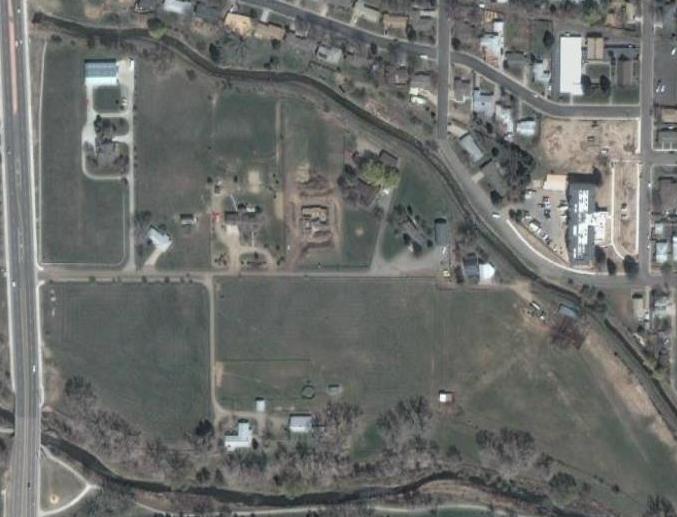
Staples Farm is bordered on the north side by the Loveland-Greeley Ditch (also called the Barnes Ditch) which
flooded down onto the farm while at the same time water coming up from the Big Thompson River to the south created
a cross-flow, this farm was a recipient of debris, silt and even boulders carried in the flash flood down the canyon all
the way from Estes Park.
While 145 people perished in the Big Thompson flood, 6 people were never found and are believed by some to be
buried under the settlement on Staples’ Farm. According to one elderly resident, this is the site where the Deputy
Sheriff’s car and a number of the deceased were recovered after the waters of the flash flood subsided. It is common
for flood victims to be partially or completely buried in the silt, dirt and rocks carried by the river.
On an adjacent hill overlooking the farm stood Loveland’s only hospital at the time (later a school district building and
now a retirement complex) where rescue workers descended onto Staples Farm to recover the bodies of those who
perished in the flood.
Ironically, NOAA (the National Oceanic & Atmosphere Administration) credits the Big Thompson flood with helping
to stop construction of homes on low-lying property near rivers across the country;
“An aftermath of the flood was adoption of numerous regulations that limit building along the Big Thompson River and
other, similar rivers throughout the United States.”
Despite the historical significance of the property, a decision by Loveland’s Planning Commission to deny the annex
request and considerable opposition from the surrounding property owners, Loveland City Manager Don Williams and
city staff are recommending to Loveland’s City Council to annex, re-zone and approve a proposed housing
development on the property during their March 18, 2008 meeting. Staff direction to city council is to “move to find
merit in the appeal” by the applicant regarding the Planning Commission’s denial.
As one Loveland resident who spoke at the planning commission stated to LovelandPolitics, “Williams has never seen a
piece of property he didn’t want annexed and developed.”
Loveland’s Planning Commission heard from nearly two-dozen residents who are adamantly opposed to the annexation
and development for a myriad of reasons on January 28, 2008. Regarding the annexation request, Loveland’s
Planning Commission concluded the following;
Annexation:
The annexation is not in the best interest of the citizens of Loveland because the density and character of the proposed
development will significantly diminish the value of the adjacent stretch of the Big Thompson River corridor as a scenic
and natural area that is important to the community. Based upon the above findings, the Planning Commission
concludes and recommends to City Council that the Staples Farm Addition not be annexed into the City of Loveland.
Subdividing the Staples Farm
In a twisted fate for the farm following the flood that began with a division of the farm due to a divorce in the 1980’s all
the way to a current group of investors who have been attempting to develop the land since 2006, ownership of Staples
Farms has been a controversy involving intrigue, greed and deception according to local lore.
Today, the open land in question is just a fraction of the previous farm but the areas that did develop did so under rural
county zoning that at the time allowed only one house per every 3-5 acres. The current plan of annexation, contrary to
Loveland’s Master Plan goal adopted in 2006 to keep open land adjacent to the Big Thompson River open, will allow
the property to be zoned as Estate Residential (ER).
The Proposal
The current proposal is to build 23 or 24 homes inside 15 acres on two semi-circle streets that connect to another
feeder street with a single ingress. The development would not be accessible to Taft Ave. but instead the neighborhood
to the east of the development.
The two semi-circles will have houses that will back the Big Thompson River on the south side of the property. The
north is bounded by the elevated Barnes Ditch where water pored over during the 1976 flood. According to one
elderly gentleman who plans to address City Council Tuesday night, “I saw it when it was under water, for me it is
immoral anyone would build there.”
Area residents contributed information for this story
Building McMansions On Hallowed Ground
The Loveland City Council will hear a proposal Tuesday night (March 18, 2008) to annex, urbanize and approve the
building of a neighborhood on an historic piece of Loveland that some longtime residents consider hallowed ground
bordering the Big Thompson River.
On July 31, 1976, according to those who still live in the area, the property known as Staples Farm (East of North Taft
Ave, North of Big Thompson River and South of Barnes Ditch) was completely underwater as the Big Thompson
River overflowed its banks and inundated low lying areas of Loveland along the river with muddy debris filled water.
For those who may be unfamiliar with the Big Thompson Flood of 1976, it swept away 418 houses while damaging
another 138 and caused approximately $40 million in damages.
Staples Farm is bordered on the north side by the Loveland-Greeley Ditch (also called the Barnes Ditch) which
flooded down onto the farm while at the same time water coming up from the Big Thompson River to the south created
a cross-flow, this farm was a recipient of debris, silt and even boulders carried in the flash flood down the canyon all
the way from Estes Park.
While 145 people perished in the Big Thompson flood, 6 people were never found and are believed by some to be
buried under the settlement on Staples’ Farm. According to one elderly resident, this is the site where the Deputy
Sheriff’s car and a number of the deceased were recovered after the waters of the flash flood subsided. It is common
for flood victims to be partially or completely buried in the silt, dirt and rocks carried by the river.
On an adjacent hill overlooking the farm stood Loveland’s only hospital at the time (later a school district building and
now a retirement complex) where rescue workers descended onto Staples Farm to recover the bodies of those who
perished in the flood.
Ironically, NOAA (the National Oceanic & Atmosphere Administration) credits the Big Thompson flood with helping
to stop construction of homes on low-lying property near rivers across the country;
“An aftermath of the flood was adoption of numerous regulations that limit building along the Big Thompson River and
other, similar rivers throughout the United States.”
Despite the historical significance of the property, a decision by Loveland’s Planning Commission to deny the annex
request and considerable opposition from the surrounding property owners, Loveland City Manager Don Williams and
city staff are recommending to Loveland’s City Council to annex, re-zone and approve a proposed housing
development on the property during their March 18, 2008 meeting. Staff direction to city council is to “move to find
merit in the appeal” by the applicant regarding the Planning Commission’s denial.
As one Loveland resident who spoke at the planning commission stated to LovelandPolitics, “Williams has never seen a
piece of property he didn’t want annexed and developed.”
Loveland’s Planning Commission heard from nearly two-dozen residents who are adamantly opposed to the annexation
and development for a myriad of reasons on January 28, 2008. Regarding the annexation request, Loveland’s
Planning Commission concluded the following;
Annexation:
The annexation is not in the best interest of the citizens of Loveland because the density and character of the proposed
development will significantly diminish the value of the adjacent stretch of the Big Thompson River corridor as a scenic
and natural area that is important to the community. Based upon the above findings, the Planning Commission
concludes and recommends to City Council that the Staples Farm Addition not be annexed into the City of Loveland.
Subdividing the Staples Farm
In a twisted fate for the farm following the flood that began with a division of the farm due to a divorce in the 1980’s all
the way to a current group of investors who have been attempting to develop the land since 2006, ownership of Staples
Farms has been a controversy involving intrigue, greed and deception according to local lore.
Today, the open land in question is just a fraction of the previous farm but the areas that did develop did so under rural
county zoning that at the time allowed only one house per every 3-5 acres. The current plan of annexation, contrary to
Loveland’s Master Plan goal adopted in 2006 to keep open land adjacent to the Big Thompson River open, will allow
the property to be zoned as Estate Residential (ER).
The Proposal
The current proposal is to build 23 or 24 homes inside 15 acres on two semi-circle streets that connect to another
feeder street with a single ingress. The development would not be accessible to Taft Ave. but instead the neighborhood
to the east of the development.
The two semi-circles will have houses that will back the Big Thompson River on the south side of the property. The
north is bounded by the elevated Barnes Ditch where water pored over during the 1976 flood. According to one
elderly gentleman who plans to address City Council Tuesday night, “I saw it when it was under water, for me it is
immoral anyone would build there.”
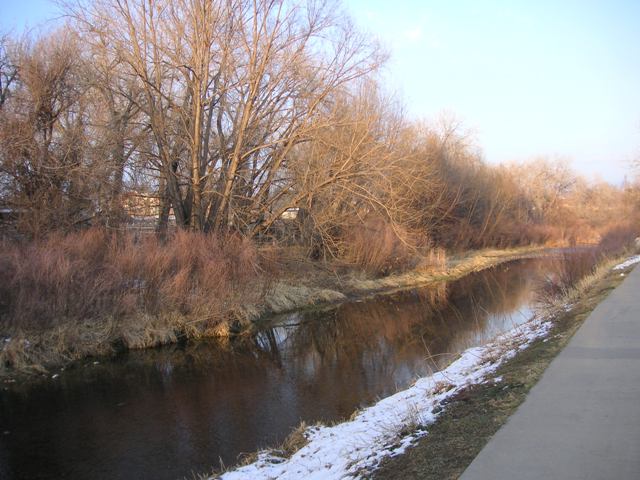
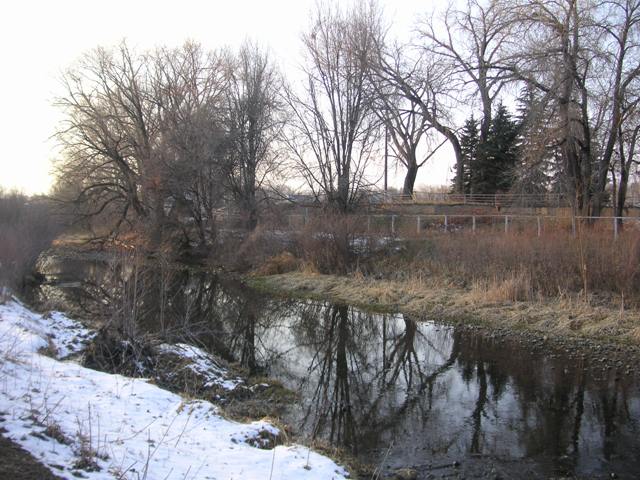
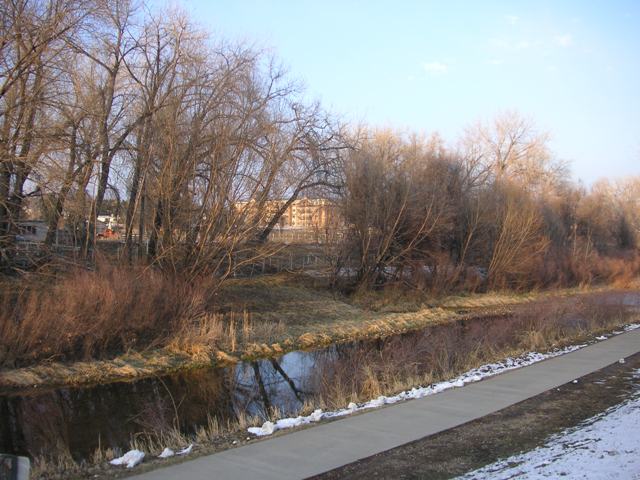
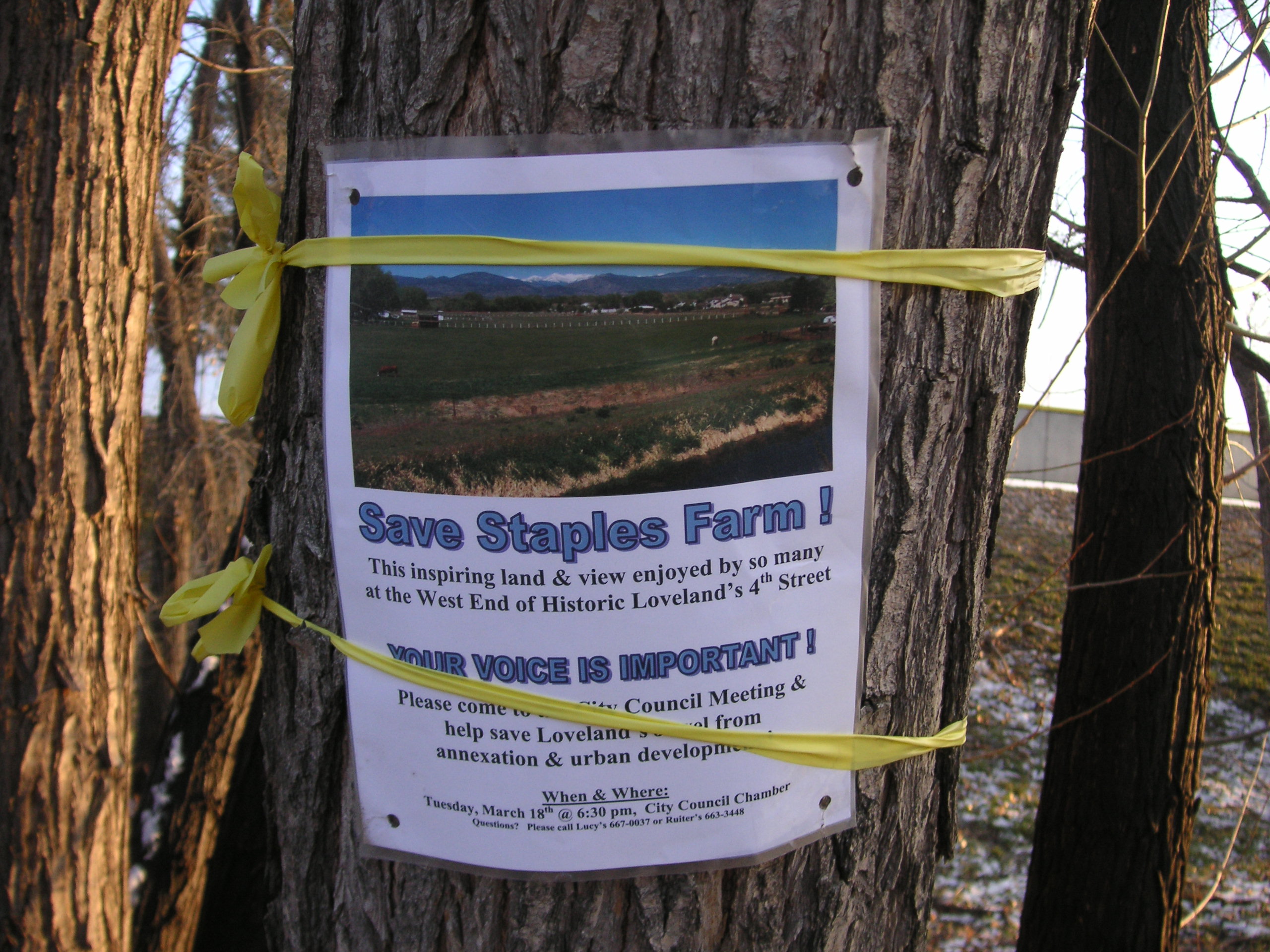
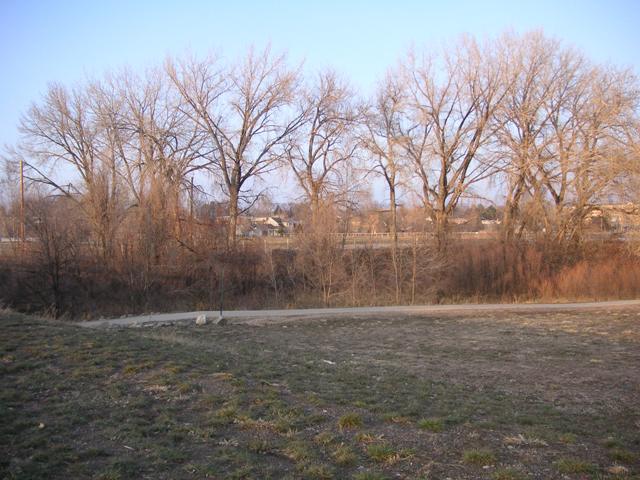
| The 15 acres proposed for development above are bordered on the south by Big Thompson River, 5th Street and Taft Ave. Below are pictures(3-17-08) from Loveland's bike trail of the property that would have 23 McMansions planned to be sold, according to applicant's testimony to the Planning Commission, for approximately $800,000 to $900,000 along the river. |