| LovelandPolitics.com a non-partisan, not for profit website about Loveland politics for residents concerned about our community's quality of life. Send us your story or comment on the blog. |

 |  |  |  |  |  |  |  |  |  |
After winning an election for the second time to the Colorado State House, District 51 Representative Don Marostica told his
supporters, “we are going to get the state’s checkbook on the computer.”
Marostica was referring to his Colorado Taxpayer Transparency Act that he introduced in 2007 but died in committee due, in
part, to claims it would have a negative fiscal impact on the state’s already tight budget. The bill known as HB 1164 would have
put into state statute the requirement that the State of Colorado make every expenditure of public funds (check by check)
available online for anyone to peruse.
In December the Denver Daily News reported,
“However, Rep. Marostica and his legislation will be back this session. This time he is armed with co-sponsors, a
coalition of citizens, and a cadre of states and organizations from both ends of the political spectrum supporting
transparency.”
tax groups and an about face on illegal immigration, Marostica dove for political cover behind his proposed Taxpayer
Transparency Act in an apparent effort to get support of party regulars.
Transparency Act in an apparent effort to get support of party regulars.
In early January of this year, hundreds of local Republicans gathered in Loveland’s seedy Pulliam Community Building to decide
who would fill an open State Senate seat in District 15. Marostica openly opposed the appointment of conservative house
colleague Kevin Lundberg by endorsing a moderate businessman seeking the appointment at the meeting.
The Republican delegates ignored Marostica’s endorsement and voted 86-42 in favor of now State Senator Kevin Lundberg.
Sensing an unease and apathy in the crowd towards his comments to fill time as votes were being counted, Marostica again
invoked his Taxpayers Transparency Act to gain approval among traditional Republicans. Marostica announced to the audience
that wasteful spending in Denver needed to end and championed his Transparency Act as the party’s vehicle to expose wasteful
spending. This earned him his only applause from the audience during his uneasy speech.
Transparency Act? What Transparency Act?
Just after New Year’s day 2009, as Colorado conservative groups like the Independence Institute prepared to wage a public
relations campaign in favor of Marostica’s Taxpayer’s Transparency bill, State House Representative Don Marostica took a
secret phone call from the bill’s most influential detractor. It was Colorado’s Democratic Governor Bill Ritter on the line.
After the phone call, Marostica abruptly announced to staff the legislation was dead. He did this without telling any colleagues
including the bill’s sponsor in the State Senate who was furious that he was left holding the bag without even the courtesy of a
phone call from Marostica.
On January 9, 2009, Colorado’s Governor addressed the Transparency initiative directly during his State of the State address to
the State Legislature,
“And we're making government more modern and transparent by putting more services online -- and soon, working with
Treasurer Kennedy's Office and Representative Marostica, we'll have the state's checkbook online.”
Two days later, when Marostica gave that uneasy speech to local Republicans in Loveland’s Pulliam Building, it was unclear he
was championing legislation for transparency which he had already abandoned. Those who applauded his “strong stand” had no
idea what had happened. Only in the fullness of time did the details of his abandonment of the cause start to unfold. State
Treasurer Kennedy, who emphatically opposes the transparency legislation, failed to give a time line of when it might be
implemented as an executive order following the governor’s speech.
Marostica later cautioned colleagues and supporters it could be as long as “three years” before any real action is taken by the
governor (note that extends beyond both his and the governor’s current terms in public office). What did become clear is that
Marostica agreed to kill the bill. In exchange, the governor agreed to implement spending transparency as an executive order –
sometime, somehow in the undefined future. In popular political vernacular this is called the “slow roll.”
Others Work To Keep Marostica’s Campaign Promises
As a result of State House District 49 Representative Lundberg being appointed to Colorado’s State Senate, BJ Nikkel was
appointed to fill-out the remainder of Lundberg’s term in the State House.
Dissatisfied with a promise to implement the transparency initiative at the governor’s leisure, discretion and timing, Republican
leaders and taxpayer transparency supporters began seeking State House Members willing to introduce the bill and fight for it in
the legislature.
Newly appointed State House Representative BJ Nikkel was asked to introduce the legislation along with her other initiatives into
the Colorado State House of Representatives. Unknown to Nikkel, Marostica’s deal with the governor was apparently to kill the
Taxpayer Transparency Act completely and to prevent any further efforts to reintroduce the bill. This is ironic since Marostica so
heavily leveraged his role as the advocate of Taxpayer Transparency during his re-election campaign only a month earlier.
Rep. Nikkel introduced HB 09-1288 as a the new Colorado Taxpayer Transparency Act that will now be heard by the House
Finance Committee on March 4, 2009. She has already signed a large number of co-sponsors to the bill and received support
from both sides of the aisle. The Independence Institute along with the Republican leadership in the State Legislature are also
expected to rally behind the bill in an effort to put the Colorado Taxpayer Transparency Act into state statute. Marostica,
however, is not a co-sponsor of the bill.
Marostica Threatens New Colleague – May Have Run Afoul of State Law
When Marostica learned of Nikkel’s effort to re-introduce a similar spending transparency bill in the current legislative session, he
became furious. Rumor around the State Capitol is that Marostica “threatened” to “embarrass” Nikkel if she introduced the bill.
Nikkel proceeded nonetheless.
State law specifically prohibits anyone from providing inducements, incentives or even certain types of threats to either encourage
or discourage bills from being introduced to the legislature for consideration. In addition, any deal Marostica may have made with
the governor to prevent the bill from being re-introduced and his own abandonment of the bill could also be in contradiction of the
same state statute.
BJ Nikkel has not demonstrated any concern for the alleged threat nor is she being unduly influenced by the governor’s office so it
appears she will be carrying the bill in the current legislative session. If indeed Marostica was offered something of substance by
the governor in exchange for dropping his legislation, his outburst towards BJ Nikkel and later his own party leaders may be
related to his belief that their actions have put the benefits of his own personal deal with the governor in jeopardy.
A History of Putting Business Ahead of Civic Duties
Theories over Marostica’s erratic behavior in recent months abound. In fact, his behavior appears to be characteristic of once
Loveland City Councilman Don Marostica. He abandoned his post on Loveland’s City Council upon learning that federal law
would prohibit him from presiding over disbursement of redevelopment funds for a proposed project where he would be the
developer.
On June 1, 2004 the Loveland City Attorney informed the Loveland City Council in a written memorandum that Marostica
requested a "waiver" from City Code Section 2.14.015 that prohibits a member of the City Council from having a "substantial
financial interest" in any contract with the City. The council granted that waiver which covered his actions as a councilman to even
obtain contracts with the city he was helping to govern if necessary without being in violation of any ethical standard.
After a public go around with the city attorney regarding the attorneys advice regarding a redevelopment proposal of Loveland’s
old sugar beat factory, Marostica resigned his position because federal law prevented his proposed conflict of interest.
Given this history, many speculate his firm, Loveland Commercial, is interested in receiving some benefit from Colorado’s share of
the stimulus package passed by the U.S. Congress. Another theory is the governor has promised a state-wide appointment or
some other prestigious position to Marostica in exchange for his cooperation on the Joint Budget Committee and for killing his
own transparency legislation.
Given both the potentially scandalous and even legal ramifications of a secret deal to abandon the transparency legislation, it is
unlikely the full story will be revealed anytime soon. In the meantime, some are keeping a close eye on Marostica to see what his
next career moves may reveal about a secret deal.
supporters, “we are going to get the state’s checkbook on the computer.”
Marostica was referring to his Colorado Taxpayer Transparency Act that he introduced in 2007 but died in committee due, in
part, to claims it would have a negative fiscal impact on the state’s already tight budget. The bill known as HB 1164 would have
put into state statute the requirement that the State of Colorado make every expenditure of public funds (check by check)
available online for anyone to peruse.
In December the Denver Daily News reported,
“However, Rep. Marostica and his legislation will be back this session. This time he is armed with co-sponsors, a
coalition of citizens, and a cadre of states and organizations from both ends of the political spectrum supporting
transparency.”
tax groups and an about face on illegal immigration, Marostica dove for political cover behind his proposed Taxpayer
Transparency Act in an apparent effort to get support of party regulars.
Transparency Act in an apparent effort to get support of party regulars.
In early January of this year, hundreds of local Republicans gathered in Loveland’s seedy Pulliam Community Building to decide
who would fill an open State Senate seat in District 15. Marostica openly opposed the appointment of conservative house
colleague Kevin Lundberg by endorsing a moderate businessman seeking the appointment at the meeting.
The Republican delegates ignored Marostica’s endorsement and voted 86-42 in favor of now State Senator Kevin Lundberg.
Sensing an unease and apathy in the crowd towards his comments to fill time as votes were being counted, Marostica again
invoked his Taxpayers Transparency Act to gain approval among traditional Republicans. Marostica announced to the audience
that wasteful spending in Denver needed to end and championed his Transparency Act as the party’s vehicle to expose wasteful
spending. This earned him his only applause from the audience during his uneasy speech.
Transparency Act? What Transparency Act?
Just after New Year’s day 2009, as Colorado conservative groups like the Independence Institute prepared to wage a public
relations campaign in favor of Marostica’s Taxpayer’s Transparency bill, State House Representative Don Marostica took a
secret phone call from the bill’s most influential detractor. It was Colorado’s Democratic Governor Bill Ritter on the line.
After the phone call, Marostica abruptly announced to staff the legislation was dead. He did this without telling any colleagues
including the bill’s sponsor in the State Senate who was furious that he was left holding the bag without even the courtesy of a
phone call from Marostica.
On January 9, 2009, Colorado’s Governor addressed the Transparency initiative directly during his State of the State address to
the State Legislature,
“And we're making government more modern and transparent by putting more services online -- and soon, working with
Treasurer Kennedy's Office and Representative Marostica, we'll have the state's checkbook online.”
Two days later, when Marostica gave that uneasy speech to local Republicans in Loveland’s Pulliam Building, it was unclear he
was championing legislation for transparency which he had already abandoned. Those who applauded his “strong stand” had no
idea what had happened. Only in the fullness of time did the details of his abandonment of the cause start to unfold. State
Treasurer Kennedy, who emphatically opposes the transparency legislation, failed to give a time line of when it might be
implemented as an executive order following the governor’s speech.
Marostica later cautioned colleagues and supporters it could be as long as “three years” before any real action is taken by the
governor (note that extends beyond both his and the governor’s current terms in public office). What did become clear is that
Marostica agreed to kill the bill. In exchange, the governor agreed to implement spending transparency as an executive order –
sometime, somehow in the undefined future. In popular political vernacular this is called the “slow roll.”
Others Work To Keep Marostica’s Campaign Promises
As a result of State House District 49 Representative Lundberg being appointed to Colorado’s State Senate, BJ Nikkel was
appointed to fill-out the remainder of Lundberg’s term in the State House.
Dissatisfied with a promise to implement the transparency initiative at the governor’s leisure, discretion and timing, Republican
leaders and taxpayer transparency supporters began seeking State House Members willing to introduce the bill and fight for it in
the legislature.
Newly appointed State House Representative BJ Nikkel was asked to introduce the legislation along with her other initiatives into
the Colorado State House of Representatives. Unknown to Nikkel, Marostica’s deal with the governor was apparently to kill the
Taxpayer Transparency Act completely and to prevent any further efforts to reintroduce the bill. This is ironic since Marostica so
heavily leveraged his role as the advocate of Taxpayer Transparency during his re-election campaign only a month earlier.
Rep. Nikkel introduced HB 09-1288 as a the new Colorado Taxpayer Transparency Act that will now be heard by the House
Finance Committee on March 4, 2009. She has already signed a large number of co-sponsors to the bill and received support
from both sides of the aisle. The Independence Institute along with the Republican leadership in the State Legislature are also
expected to rally behind the bill in an effort to put the Colorado Taxpayer Transparency Act into state statute. Marostica,
however, is not a co-sponsor of the bill.
Marostica Threatens New Colleague – May Have Run Afoul of State Law
When Marostica learned of Nikkel’s effort to re-introduce a similar spending transparency bill in the current legislative session, he
became furious. Rumor around the State Capitol is that Marostica “threatened” to “embarrass” Nikkel if she introduced the bill.
Nikkel proceeded nonetheless.
State law specifically prohibits anyone from providing inducements, incentives or even certain types of threats to either encourage
or discourage bills from being introduced to the legislature for consideration. In addition, any deal Marostica may have made with
the governor to prevent the bill from being re-introduced and his own abandonment of the bill could also be in contradiction of the
same state statute.
BJ Nikkel has not demonstrated any concern for the alleged threat nor is she being unduly influenced by the governor’s office so it
appears she will be carrying the bill in the current legislative session. If indeed Marostica was offered something of substance by
the governor in exchange for dropping his legislation, his outburst towards BJ Nikkel and later his own party leaders may be
related to his belief that their actions have put the benefits of his own personal deal with the governor in jeopardy.
A History of Putting Business Ahead of Civic Duties
Theories over Marostica’s erratic behavior in recent months abound. In fact, his behavior appears to be characteristic of once
Loveland City Councilman Don Marostica. He abandoned his post on Loveland’s City Council upon learning that federal law
would prohibit him from presiding over disbursement of redevelopment funds for a proposed project where he would be the
developer.
On June 1, 2004 the Loveland City Attorney informed the Loveland City Council in a written memorandum that Marostica
requested a "waiver" from City Code Section 2.14.015 that prohibits a member of the City Council from having a "substantial
financial interest" in any contract with the City. The council granted that waiver which covered his actions as a councilman to even
obtain contracts with the city he was helping to govern if necessary without being in violation of any ethical standard.
After a public go around with the city attorney regarding the attorneys advice regarding a redevelopment proposal of Loveland’s
old sugar beat factory, Marostica resigned his position because federal law prevented his proposed conflict of interest.
Given this history, many speculate his firm, Loveland Commercial, is interested in receiving some benefit from Colorado’s share of
the stimulus package passed by the U.S. Congress. Another theory is the governor has promised a state-wide appointment or
some other prestigious position to Marostica in exchange for his cooperation on the Joint Budget Committee and for killing his
own transparency legislation.
Given both the potentially scandalous and even legal ramifications of a secret deal to abandon the transparency legislation, it is
unlikely the full story will be revealed anytime soon. In the meantime, some are keeping a close eye on Marostica to see what his
next career moves may reveal about a secret deal.
| Secrets Behind Taxpayer Transparency Act Did a secret deal with Governor Ritter kill the bill? |
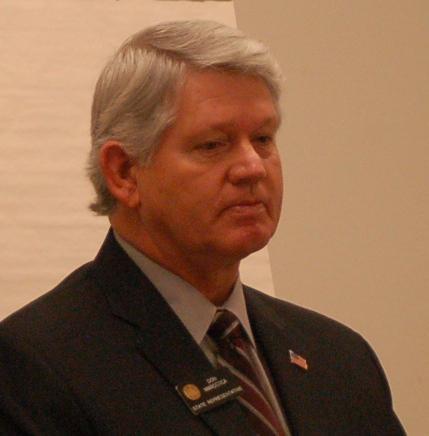
| Don Marostica |
| Special Investigative Report |


| Dist. 49 State House Representative BJ Nikkel |
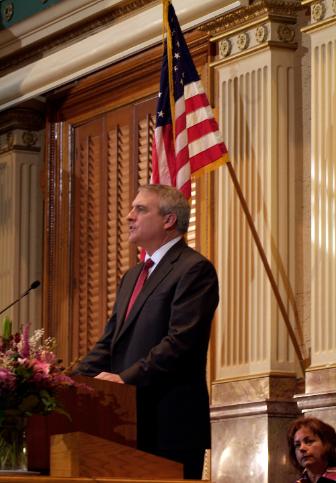
| Governor Ritter During State Of State Speech to |
| KFKA's talk show host Amy Oliver wrote the following editorial about the Act click here |