| LovelandPolitics.com a non-partisan, not for profit website about Loveland politics for residents concerned about our community's quality of life. Send us your story or comment on the blog. |

 |  |  |  |  |  |  |  |  |  |
Background
sponsors Arveschoug-Bird (pronounced Ar-va-scow-Bird). At the time, many believed it was intended to deflate enthusiasm for
the upcoming ballot measure called the Taxpayer's Bill of Rights (TABOR). Arveschoug-Bird was seen as the legislators' attempt
to show voters they could be responsible when appropriating spending for the state's budget and didn't require a constitutional
amendment (TABOR) that would also limit their ability to raise revenue through future tax increases.
TABOR contemplated future attempts to tinker with Arveschoug-Bird by not only limiting the State Legislature's ability to raise
future taxes without first obtaining voter approval but also restricting the legislature from weakening any "existing" spending limits
without first having it approved by a vote of the people.
The Question
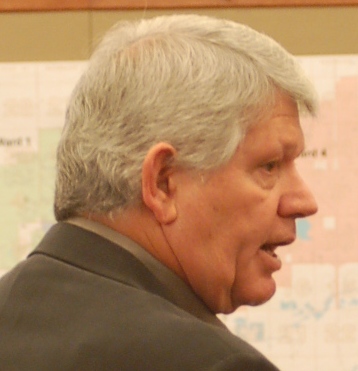
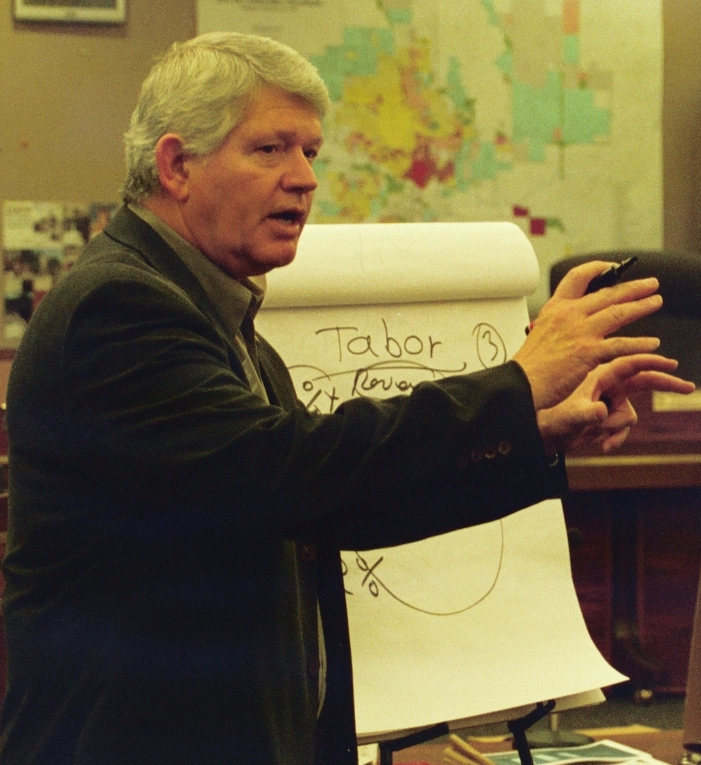
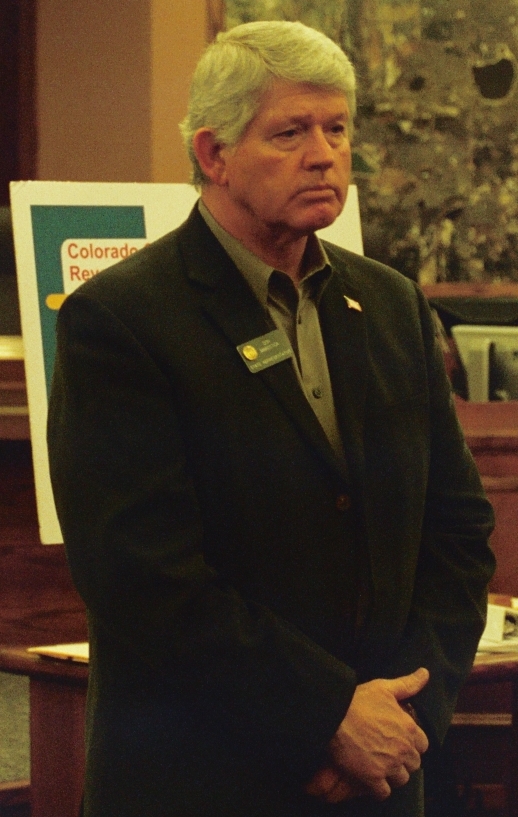
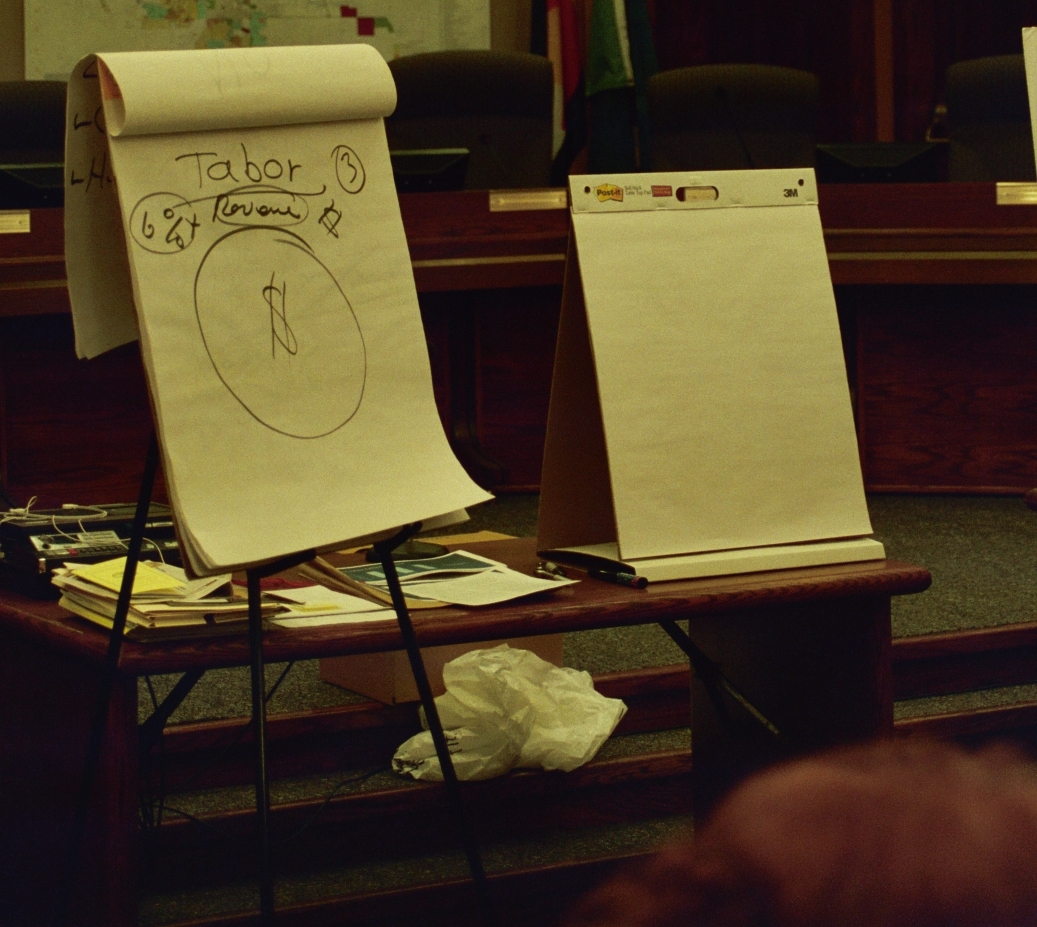
Wellington resident Patrick Albright was among those who attended Rep. Don Marostica's public meeting organized by
Marostica to explain his reasons for sponsoring legislation to overturn Arveschoug-Bird. Albright, as part of his question to the
legislator, read the following excerpt from the Colorado State Constitution Article X Section 20;
"Other limits on district revenue, spending, and debt may be weakened only by future voter approval."
Albright continued by reading to Marostica from a memorandum of the Office of Legislative Legal Services for the Colorado
General Assembly, "A court would conclude.....the Arveschoug-Bird limit is a limit on spending..." The question then
posed by Albright was that if the state is headed for a financial "train wreck" as Marostica indicated in his earlier comments, why
not put the removal of a spending limit up to a vote of the people? A number of people in the crowd applauded when Albright
posed the question indicating their support.
The Response
Marostica responded by stating, "that is subject to interpretation" followed by a comment that he would leave it to the "legal
eagles" to decide. Albright than reminded Marostica that he had sworn to defend and protect the constitution when becoming a
member of the legislature. Marostica later stated his preference that the Colorado Courts decide the issue thus implying a lack of
confidence that voters would approve his initiative to remove the 6% spending increase cap on the state's general fund.
Conclusion
Later in the discussion, Marostica repeated his desire to convene a state constitutional convention to repeal TABOR but indicated
limiting it to only financial matters is impossible thus rendering such an effort futile. This is a similar theme he and former state
house representative Bill Kaufman discussed before Loveland's City Council study session only a month earlier.
Albright, like many others, left the meeting frustrated that their representative has become the only Republican in the Colorado
Legislature to support overturning Arveschoug-Bird. Marostica, like many of those most against TABOR in general, is hanging
onto a thinly veiled argument that Arveschoug-Bird is an "appropriations" limit instead of a direct spending limit. His response to
Albright's questions, "leave it to the legal eagles" indicates even Marostica has trouble arguing the rationalization in public as to
why he believes SB09-228 is not unconstitutional. Minimally, anyone supporting, sponsoring or in this case introducing a bill
should be able to provide a sound argument as to why they believe the bill they propose is in conformity with the State
Constitution.
Marostica failed to provide such a defense.